






Steel, Aluminum, or Titanium: The Same Gravel Bike, Three Ways
Comparison · Gravel
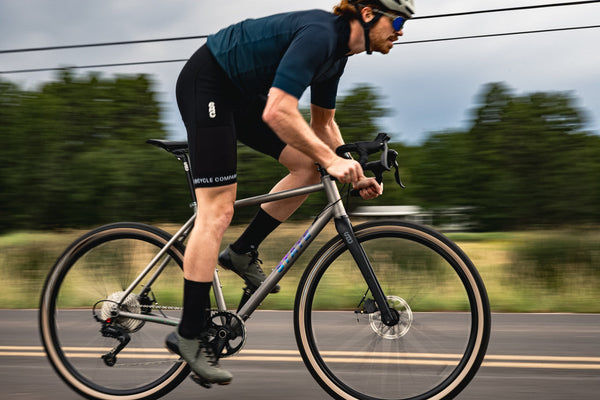
Steel, aluminum, or titanium. Most frame material advice is written in the abstract. This one is not, because State builds the same All Road in all three, so the only thing that changes is the metal. Here is what your money actually buys, and the two places the cheapest bike wins outright.

Frame material is where gravel shoppers freeze. Everyone has an opinion, most of it borrowed, and almost every guide answers the question in the abstract: steel is compliant, aluminum is stiff, titanium lasts forever. All broadly true. None of it tells you whether to spend $999.99 or $2,499.99.
We can do better than the abstract version, because State Bicycle Co. builds the same All Road platform in three different metals. Same drop bars. Same brake system. Same tire clearance philosophy. Same geometry intent. When you line them up, the metal is very nearly the only variable, which makes this the rare comparison where the price difference is actually measurable.
So we measured it. Every number below comes off the live product pages, not a spec memory. A few of them surprised us.
Start with what is identical
This is the part nobody tells you, and it reframes the whole decision. Across all three bikes, at $999.99 and at $2,499.99, these things do not change:
- The brakes. All three run State's hydro mechanical disc calipers. That means a cable pulls a hydraulic piston at the caliper. They are good, they are field serviceable anywhere, and they are not full hydraulic on any of the three. You are not buying better stopping power.
- The cockpit. State All Road flared drop bars on all three.
- The drivetrain brand and philosophy. A 1x setup, no front derailleur, on every one.
- Thru axles and tubeless capability. Standard across the range.
On most bike lineups, stepping up a price tier upgrades the brakes and the groupset. Here it does not. That means the money you spend is going almost entirely into the frame, the fork, and the weight. Which makes it much easier to work out whether it is worth it.
The weight ladder, and what a pound costs
Here are the three claimed weights: 28 lb for steel, 22 lb for aluminum, 20 lb for titanium. That is a real spread. Eight pounds is the difference between shouldering a bike up subway stairs cheerfully and resenting it.
But look at what each step actually costs you per pound saved. This is the number that should decide your budget.
If you are buying titanium to save weight, you are paying roughly eight times per pound what the aluminum step costs. Titanium is not a weight upgrade. It is a longevity and ride feel upgrade that happens to also be light.
That is not an argument against titanium. It is an argument for buying it for the right reason. Gr9 titanium does not rust, does not fatigue on any normal timeline, and has a springiness under load that steel and aluminum genuinely do not replicate. People who own them keep them for twenty years. If that is what you want, the weight is a bonus, not the point.
Where the cheapest bike wins
Now the part that surprised us. On two measurable specs, the $999.99 steel bike beats the $1,399.99 aluminum one, and on one of them it beats the $2,499.99 titanium too.
1. Gear range
The steel All Road runs a 1x12 drivetrain with an 11-46t cassette. The aluminum runs 1x11 with 11-42t. So the middle bike, the one that costs $400 more, has one fewer gear and a narrower spread. Titanium goes back to 1x12 and 11-46t.
In plain terms: on a steep loaded climb, the $999.99 bike has an easier bailout gear than the $1,399.99 bike. If your riding involves long climbs with bags on, that is not a footnote.
2. Tire clearance on 650b
Steel clears 2.4 inch tires on 650b wheels. Titanium clears 2.2 inch and up. The cheapest frame in the lineup takes the fattest rubber, which means on genuinely rough ground it can be set up more capably than the most expensive one.
The aluminum bike is not a downgrade. It trades two gears for six pounds and a carbon fork, which is exactly the right trade if you ride fast on mixed surfaces and unloaded. But it is a trade, not a straight upgrade, and nobody selling you the bike is going to phrase it that way.
The three bikes
Sizes and wheel options on these move independently, and it is normal for only some of them to be available at any moment. Check the size selector on the product page before you settle on a bike, and if your size is not there it is worth asking us when it lands rather than assuming it is gone.

- Frame: Double butted 4130 chromoly, TIG welded
- Fork: 4130 chromoly steel
- Weight: about 28 lb
- Drivetrain: 1x12, 11-46t, 40t chainring
- Clearance: 55mm on 700c, 2.4 in on 650b
- Brakes: Hydro mechanical disc, 160mm rotors
The heaviest bike here and the most useful one. Double butted chromoly means thicker tube walls at the welds and thinner in the middle, which is why steel this cheap does not ride harsh. It has the widest gear range of the three, the most tire clearance of the three, mounts scattered all over the frame and fork for racks, fenders, cages and bags, plus UDH dropouts so the rear derailleur hanger is a replaceable standard part rather than a proprietary hunt.
Steel also has the quiet advantage nobody mentions until they need it: a bent steel frame can usually be repaired by a local framebuilder. Aluminum and carbon generally cannot.
Who should skip it: anyone who lifts their bike up stairs daily, or who rides unloaded and cares about climbing speed. Twenty eight pounds is real.
Get it if: you want one bike that commutes Monday, hauls camping gear Friday, and you would rather spend the other $1,500 on wheels, bags and a trip.
See the 4130 All Road
- Frame: 6061 aluminum, thru axle dropouts
- Fork: Carbon fiber with 3 pack mounts
- Weight: 22 lb
- Drivetrain: 1x11, 11-42t, 42t chainring
- Wheels: 700c with 38c, or 650b with 2.1 in
- Brakes: Hydro mechanical disc, 160mm rotors
Six pounds lighter than the steel for $400, which is the best value move in the lineup. The carbon fork is doing a lot of the work here. It takes the buzz out of the front end that an aluminum fork would transmit straight into your hands, and it is where most of the comfort difference between this and the steel bike disappears.
You give up a gear and some range to get here. On rolling terrain and fast unloaded gravel you will never notice. On a loaded climb you will.
Who should skip it: bikepackers and anyone regularly climbing with weight on the bike. The 11-42t cassette is the narrowest range of the three, and that is the wrong compromise for hauling.
Get it if: you ride fast, mostly unloaded, on a mix of pavement and gravel, and you want the lightest bike you can get without spending four figures on frame material alone.
See the 6061 All Road
- Frame: Double butted Gr9 3AL/2.5V titanium
- Fork: Carbon Black Label gravel
- Weight: 20 lb
- Drivetrain: 1x12, 11-46t
- Clearance: 50mm and up on 700c, 2.2 in on 650b
- Extras: Ceramic bearing headset, UDH, PVD finish
The lightest of the three and the only one that is effectively immune to the thing that kills bikes: corrosion. Gr9 titanium does not need paint to survive, which is why the finish here is a PVD colour process over sandblasted metal rather than a coating that chips down to rust. Leave it out in the rain for a decade and it does not care.
It also gets the wide 1x12 range back, a ceramic bearing headset, and five frame sizes instead of four, which matters more than people expect. A better fit beats a lighter frame every time.
Who should skip it: anyone buying it mainly to save weight. Two pounds over the aluminum for $1,100 is a bad weight deal, and we would rather say so. Also skip it if you are new to gravel and still working out what you like.
Get it if: you already know this is the riding you do, you want to buy the frame once, and you would rather own one bike for fifteen years than three bikes for five each.
See the Titanium All RoadHead to head, every number that differs
Green marks the winner on each row. Where a row is not a competition, both are left plain.
| Spec | 4130 Steel · $999.99 | 6061 Aluminum · $1,399.99 | Titanium · $2,499.99 |
|---|---|---|---|
| Claimed weight | about 28 lb | 22 lb | 20 lb |
| Frame | Double butted 4130 chromoly | 6061 aluminum | Double butted Gr9 titanium |
| Fork | 4130 steel | Carbon | Carbon Black Label |
| Speeds | 12 | 11 | 12 |
| Cassette range | 11-46t | 11-42t | 11-46t |
| Clearance, 700c | 55mm | 38c fitted | 50mm and up |
| Clearance, 650b | 2.4 in | 2.1 in fitted | 2.2 in and up |
| Brakes | Hydro mechanical, 160mm | Hydro mechanical, 160mm | Hydro mechanical |
| Wheel size options | 650b or 700c | 650b or 700c | 700c |
| Frame sizes | 4 | 4 | 5 |
| Rider height range | 5 ft 1 to 6 ft 5 | 5 ft 1 to 6 ft 5 | 5 ft 1 to 6 ft 4 |
| Headset | ZS44 threadless | Threadless | Ceramic bearing |
| Corrosion risk | Rusts if the finish fails | Oxidises slowly | Effectively none |
| Repairable if bent | Usually, by a framebuilder | Rarely | Specialist only |
| Colour choices in stock | 3 | 1 | 1 |
What about carbon
Fair question, and the honest answer is that it does not belong in this comparison right now. State does build a Carbon All Road, but every complete carbon build is currently sold out. What is available is the Carbon All Road v2 frame and fork set at $1,399.99, which is a different purchase entirely: you are supplying the wheels, drivetrain, brakes and cockpit yourself.
If you already have a parts bin and know how to build a bike, that is a genuinely good deal. If you want to buy a bike and ride it this weekend, it is not the answer, and we would rather tell you that than pad the list.

- What you get: Frame and fork only
- Sizes: 6
- You supply: Wheels, drivetrain, brakes, cockpit
Get it if: you are building up a bike and want carbon at the frame level without a complete bike price.
See the carbon frame setSo which one is actually for you
Answer honestly, then stop reading and go ride.
| If this is you | Buy | Why |
|---|---|---|
| First proper gravel bike, unsure what you like | 4130 Steel | Cheapest way in, widest range, least regret if your taste changes |
| Bikepacking, camping, loaded touring | 4130 Steel | Most mounts, most clearance, easiest bailout gear, repairable anywhere |
| Carrying the bike up stairs most days | 6061 Aluminum | Six pounds off for $400 is the best weight money in the lineup |
| Fast unloaded gravel, lots of climbing | 6061 Aluminum | Lightest of the two affordable options, carbon fork calms the front end |
| Salted winter roads, coastal air, wet storage | Titanium | The only one corrosion genuinely does not touch |
| You want to buy one bike and keep it forever | Titanium | No fatigue life worry, no paint to fail, five sizes to fit you properly |
| You are between two frame sizes | Titanium | Five sizes instead of four is the one thing money reliably buys here |
| You already have wheels and a groupset spare | Carbon frame set | Carbon frame at $1,399.99 if you can build it yourself |
| Chasing the lowest weight per dollar | 6061 Aluminum | $67 per pound saved versus $550 for the titanium step |
Buy the steel if you carry things. Buy the aluminum if you climb things. Buy the titanium if you are done buying bikes. And do not buy titanium to save weight, because that is the most expensive way to lose two pounds in this catalogue.
Questions we get asked
Is steel really more comfortable, or is that just a myth?
Partly real, partly overstated. Steel tubing flexes more than aluminum at the same diameter, and double butted tubing like this flexes more still, so the frame does take some edge off rough ground. But tire pressure and tire volume change ride comfort far more than frame material does. A steel frame on hard 38c tires rides worse than an aluminum frame on soft 2.1 inch tires. If comfort is the goal, spend on tires first.
Will an aluminum frame wear out?
Aluminum has a finite fatigue life in a way steel and titanium effectively do not, which is the technical basis for the warning. In practice a well built 6061 frame ridden normally lasts many years, and most bikes get replaced or crashed long before fatigue becomes the issue. It matters if you plan to keep one bike for twenty years. It does not matter much over five.
What is a UDH dropout and should I care?
Universal Derailleur Hanger. The little bracket the rear derailleur bolts to is designed to bend or snap in a crash so the frame does not. Historically every brand used its own shape, so replacing one meant hunting a specific part years later. UDH is a shared standard, so any bike shop can get one. The steel and titanium All Roads have it. It is a small thing that saves a big headache.
Are hydro mechanical brakes worse than full hydraulic?
They sit between cable discs and full hydraulic. A cable runs to the caliper, where a hydraulic piston does the squeezing, so you get much of the power of hydraulics with cable simplicity. You can adjust and service them with basic tools and no bleed kit, which is genuinely useful far from a bike shop. A full hydraulic system has better feel at the lever. All three of these bikes use the same system, so it is not a factor in choosing between them.
700c or 650b?
700c wheels with narrower tires roll faster on pavement and hardpack. 650b wheels are smaller, so they let you fit much fatter tires in the same frame for grip and comfort on rough ground. The steel and aluminum All Roads accept either, so you can own one bike and two wheelsets and genuinely change its character in ten minutes. Start with 700c if most of your miles are paved, 650b if most are not.
See all three side by side
Every gravel and all road bike we carry, with live pricing straight off the product pages.
Shop road and gravel bikesBelcopia


